

What Real Technical Leadership Looks Like: Lessons from RBC’s Valerie Riabova

Updated: 3 days ago
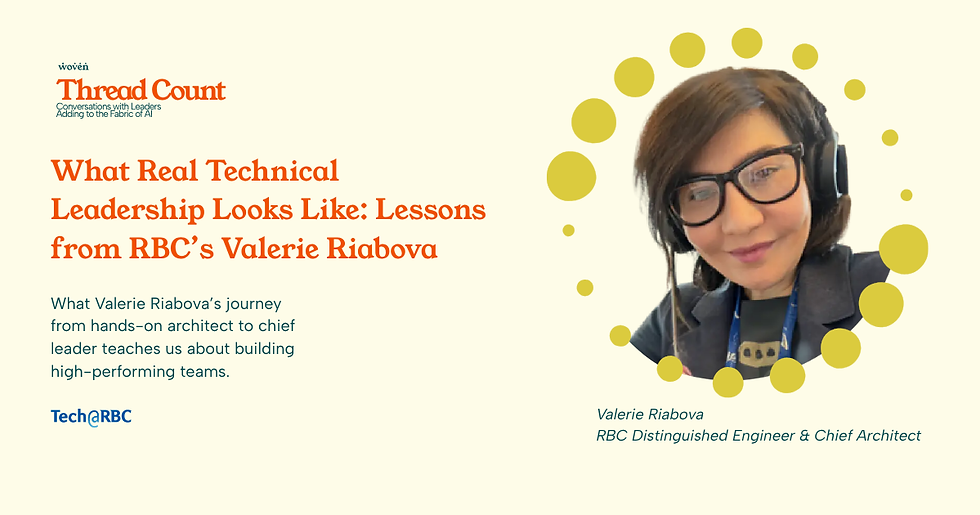
Meet Valerie Riabova, one of RBC's Distinguished Engineers, who has transitioned from a hands-on architect to leading teams of architects. In this spotlight, Valerie shares the key skills, strategies, and mindset required to excel in technical leadership.
You've made the transition from hands-on architect to leading teams of architects. What inspired you to move from hands-on technical work into leadership?
Well, the interesting thing is that I never completely moved on.
I'm very much involved in solution delivery, and that's something that I will continue doing no matter what. I don't think you can be a good architect without being hands on.
The combination of having good technical skills and business acumen put me in a position where business partners see me as somebody they want to have around. I moved into a leadership position managing teams of architects that way. It was a natural pathway for me.
There is also a selfish reason for me wanting to become a leader. I want to work with people who are direct and can discuss heated topics to help each other. It's not always easy to find a team like this. So, I figured I'll build one for myself and I've successfully done it four times already. Who doesn't want that, right?
For someone who's technically strong in an individual contributive role, but thinking about leadership, what skills could they start building now?
I would actively work on cultivating soft skills such as solid communication. There’s just no way around it.
The other important skill is adaptability: having that flexibility to understand other people's viewpoints.
You need to build your personal brand. What do you want to be known for?
I like being thought of as somebody people can trust. The fact that people trust me means that I get an inner perspective that they may not be willing to share with anybody else.
You're leading a team of brilliant solution architects, which you've crafted yourself. How do you foster innovation and collaboration?
When I interview a new candidate, I intentionally give them a controversial topic and see how they react. Are they comfortable describing their point of view? Are they intimidated by seniority? How passionate are they about the topic?
When you hire the right people, innovation and collaboration come naturally.
With technology changing so fast, how do you stay ahead of trends while also developing your team?
I can barely keep up with the trends. It's challenging!
I subscribe to “Too Long Didn't Read.” It's a free newsletter that summarizes the most interesting topics in technology.
The other newsletter I subscribe to is called “ByteByteGo”. It’s a weekly newsletter that describes new system design patterns. If somebody wants to become an architect, it's a must-have subscription.
When I have downtime, I do a lot of hands-on tutorials at home, just learning how technology works under the hood.
After I finish work, I usually go for walks and listen to Spotify books. I just finished listening to “Mastering AI: A Survival Guide to our Superpowered Future” by Jeremy Han. It's a bit philosophical, but relevant. As a techie, you want to bring in the latest and greatest technology, but you don't necessarily think about the impact it's going to have in the future.
How do you see the role of technical leaders evolving?
To be a good techie, to be somebody the business trusts, it’s not enough to understand how technology works. It's important to understand how businesses use it, what their pain points are, and how they create revenue.
If you want to be a leader, you have to become a salesperson. You have to become a marketer. You have to tell people a story, and it needs to be in a way that solicits emotions and feedback.
I think GenAI is going to make this easier. It opens an avenue for people that wouldn't become technical leaders otherwise.
What is the best career advice you've gotten?
I was very fortunate in my career. One of my early managers, Dave Schneider, was my biggest champion. One of the things that he told me is that you need to create your own opportunities. Every change is an opportunity - you have to seek them out.
And, finally, any career plot twists?
Well, that's the one that I can't answer. There's nothing definitive!


Comments